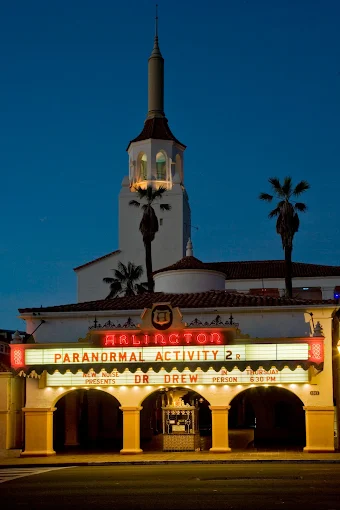
We have always considered The Arlington Theatre one of Santa Barbara’s most important treasures. The largest movie theatre in Santa Barbara, it was built in 1931 for Fox West Coast Theatres and retains retains its atmospheric Spanish Colonial / Mission Revival style. The Arlington Theatre is the largest movie theatre in Santa Barbara and was built in 1931 for Fox West Coast Theatres. Although the theatre has undergone several renovations, it retains its atmospheric Spanish Colonial / Mission Revival style. To add to the magic, the theatre is home to a 4-manual, 27-rank Robert-Morton organ, one of only five “Wonder Morton” theatre organs to have been built.
We were privileged to visit The Arlington recently to see and hear Wynton Marsalis and his 13-piece band accompany a modern silent film “Louis,” a racy paean to Louis Armstrong’s formative years. It was a thrilling event, set in The Arlington which was the perfect place to honor these two great trumpet players. This was the West Coast premiere of the film presented by UCSB Arts & Lectures.

A little history shows how the theatre and Armstrong’s life mesh together: Louis was born in 1900. In the late 1920’s, Fox West Coast Theatres wanted to build a movie theatre in Santa Barbara to compete with the Granada Theatre, owned by Warner Bros. The resultant Fox theatre was named for – and built on the site of – the Arlington Hotel, which suffered catastrophic damage in a major earthquake on 29th June 1925. While officially called the Fox Arlington Theatre, everyone knew the new movie palace as just “The Fox”. Local architects William Edwards and Joseph Plunkett designed the theatre, and the interior was decorated by the Los Angeles-based Robert E. Power Studios.
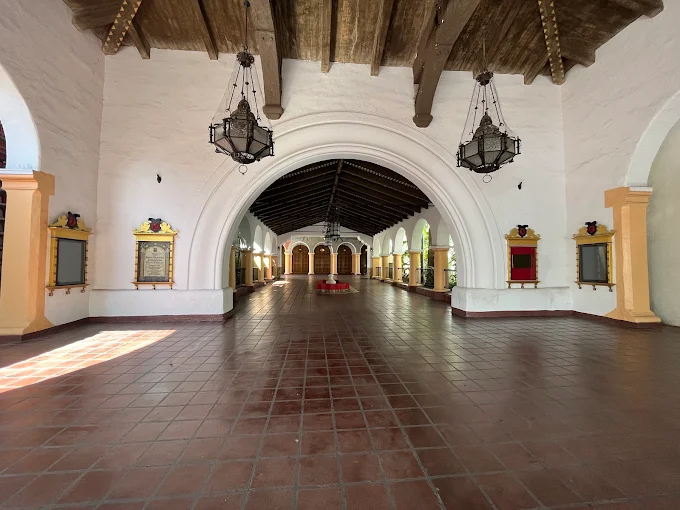
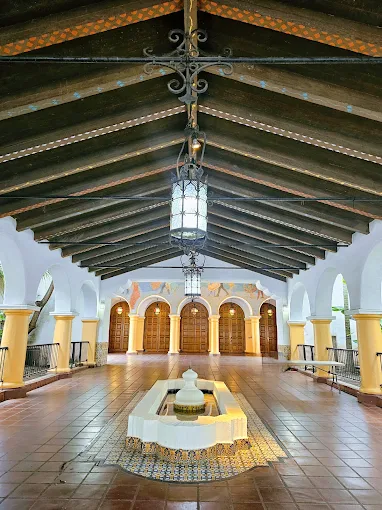
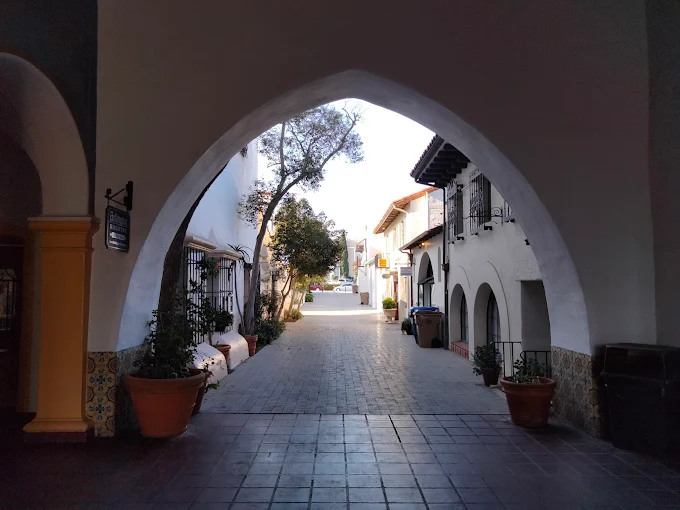
The theatre has a relatively small lobby, however the building is set half a block back from State Street street with an outdoor covered lobby (“the Paseo”) providing lobby and circulation space. Other theatres of the time which were built with these “courtyard” lobbies were Grauman’s Egyptian Theatre and Chinese Theatre in Hollywood, the Fox Fullerton and the Geffen Playhouse (completed 1929 as a masonic lodge). The Arlington is the only one of these theatres to have a covered exterior lobby, the sidewalls being open with large Spanish arches. In the center of the Paseo is a tiled fountain as would have been found in smaller Spanish villas of the time.
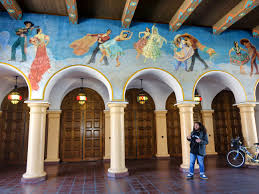
Above the theatre entrance, in the Loggia, is a mural depicting a Spanish dancer, helping to strike a theatrical note upon entrance to the theatre. To some the mural suggests a passing of time and gathering maturity of the female dancer, however in that interpretation the mural somewhat oddly runs right-to-left.
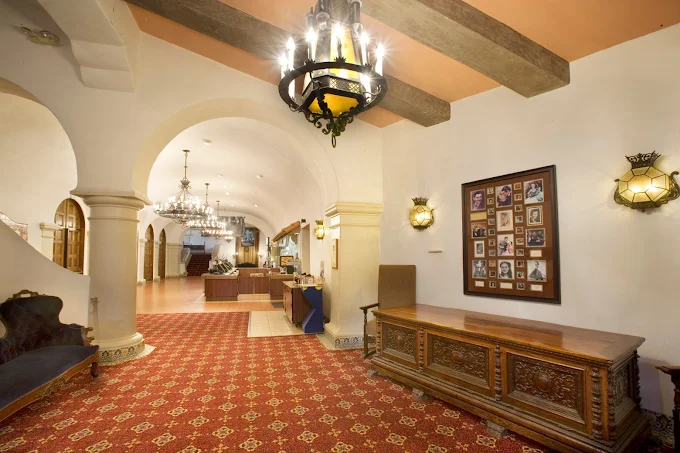
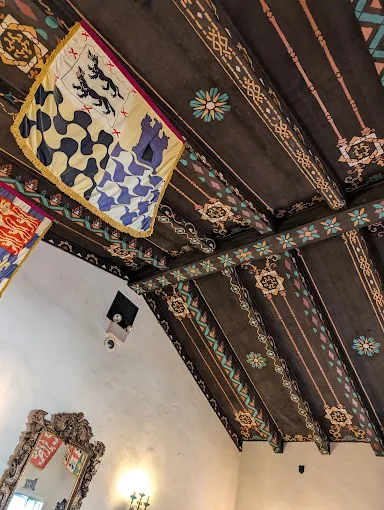
The interior lobby features a vaulted ceiling with handmade Catalonian chandeliers. The steps to the balcony, at either end of the lobby, feature ironwork balustrades/handrails and glazed Tunisian tiles. The lounge, at the house right end of the lobby, is a large apex-ceilinged room hung with flags inspired by Spanish heraldry, including the coat of arms of Spain and the coat of arms of Castile and León. The lounge’s ceiling features mock wooden rafters, brightly painted with Spanish-inspired patterns.
Within the auditorium, the proscenium arch was originally formed by a stone bridge, with semicircular arch and apex-shaped top. Its design matched the Spanish village buildings flanking it on either side, joining the two “villages”, and it was 50ft wide by 30ft high. Through the stone arch was seen the fire curtain, painted (by John M. Gamble, known for his California floral coastal and landscape paintings) to represent an Andalusian landscape: the view into a river valley as seen through the bridge. Steps allowed actors to ascend from stage level at Stage Right, over the bridge, and either into a turret at Stage Left, or descending back to the balcony level courtyard buildings through the House Right organ chamber and thence down into the auditorium.
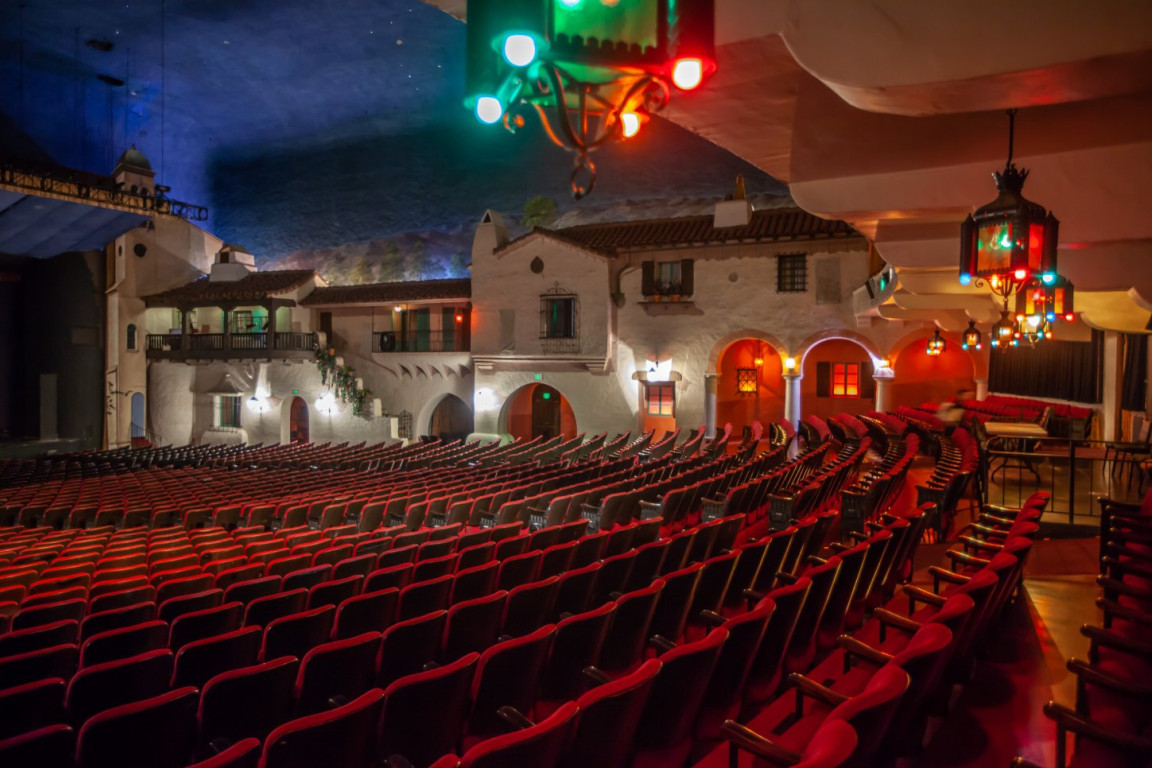
The Spanish village buildings on either side of the auditorium feature balconies, working windows, terraces, and stairways. They were styled after buildings in Spain but also in part after some of the early Mission Revival buildings in Santa Barbara. It was reported that grilles, weathervanes, and other ironwork such as rain gutters/eavestroughs were handmade to match the period of the building in question. The lanterns hanging from the buildings, which illuminate the auditorium, were copied from 14th-16th century Catalonian street lamps. The auditorium seat standards were inspired by the design of 15th century benches in Segovia. All these features are still intact to this day. Hidden cove lighting illuminates the sidewall (left) in different colors. The auditorium walls blend with the ceiling, the acoustic plaster being painted with distant vistas on the sidewalls (and lit in appropriate colors by hidden cove lighting), giving way to a twilight sky above, peppered with twinkling stars which blinked throughout each performance. One observer likened it to “a swashbuckling scene straight out of an old Zorro motion picture”.
The Mission Revival style was popular during the rebuilding of downtown Santa Barbara after the 1925 earthquake, and the popularity of the style – for both new and replacement buildings – afforded the city a cohesiveness in its architecture which is still evident today, almost 100 years later. The Arlington Theatre was notable for its tower, the design being reported in the media at the time to have been inspired by the Alcázar of Segovia in Spain, although it looks like the bell tower of the Segovia Cathedral was more likely the inspiration, with additional touches being informed by the tower of the Carthay Circle Theatre. Whereas the Arlington Theatre’s tower housed no bells, it did support a pinnacle sign: a rotating elongated drum with “FOX” written on it in lit-up neon lettering.
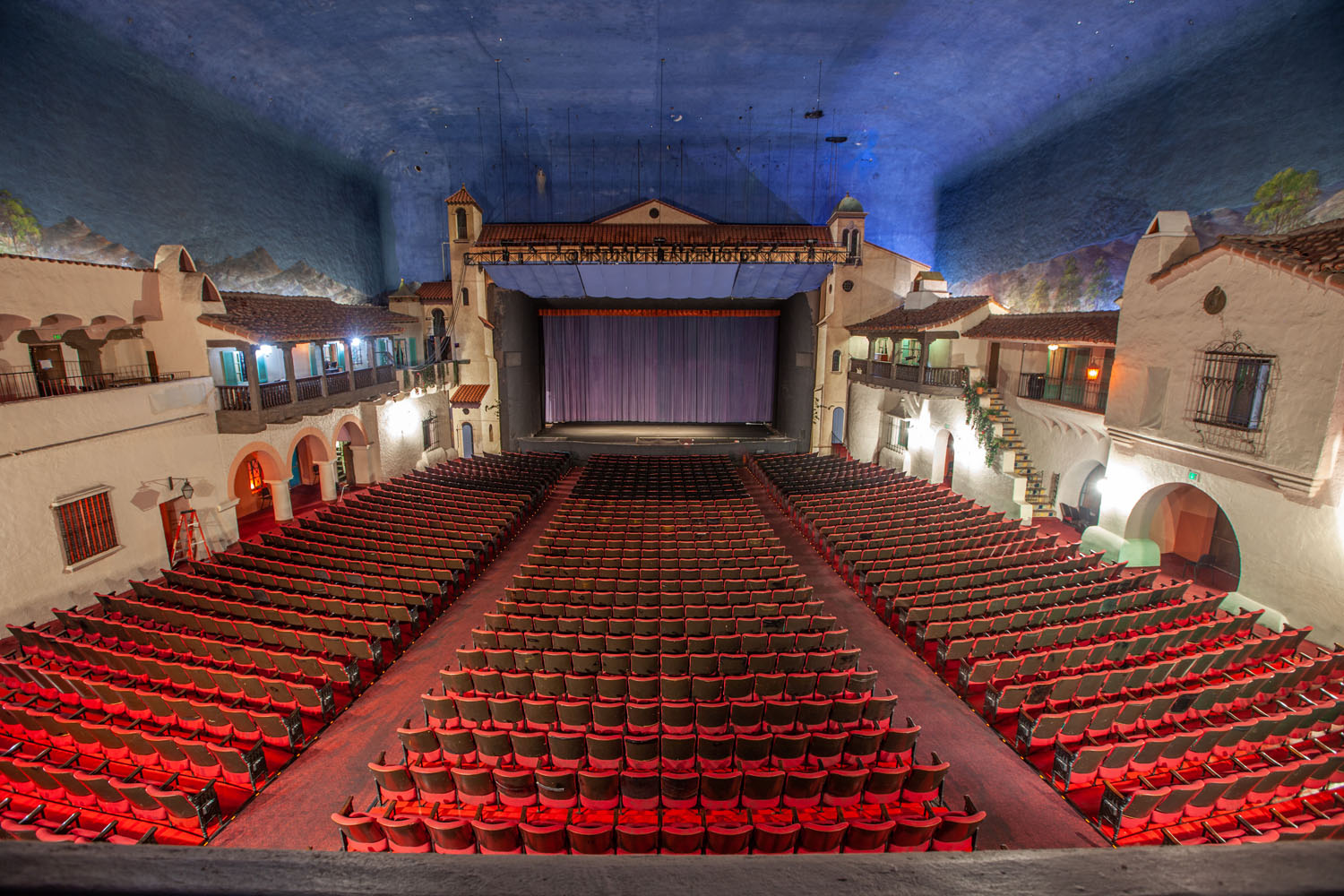
The Arlington Theatre is legendary, like Armstrong and Marsalis. has seating for over 2,000 guests and has a regular schedule of first run film, live performances, and major film festival events. The Arlington is also available for rentals. The Arlington Theatre boasts a recently remodeled courtyard, known as the Arlington Courtyard which offers a modern look as compared to the Spanish style architecture of the majestic venue. The open air covered patio offers a full bar, beautiful décor furnishings which include fire pits, rattan couches and chairs. The courtyard is open during concert performances allowing guests to enjoy the space. The Arlington Courtyard has a capacity of 299 and is available to rent for private parties, receptions and special events. To learn more about The Arlington Theatre and the Arlington Courtyard, visit our official website: ArlingtonTheatreSB.com .For information on the Arlington Theatre, visit: ArlingtonTheatreSB.com


 Travel by ENTREE
Leave a comment